Staff stability
Stable
Source: Kolada (municipality-aggregated certified teacher trend).

FORELLEN FÖRSKOLA is a medium-sized municipal preschool with 79 children.
FORELLEN FÖRSKOLA is a medium-sized municipal preschool with 79 children. The share of staff with pedagogical higher education (62.9%) is above the national average of 44.3%.
FORELLEN FÖRSKOLA is compared here with 58 other schools with the same school form in Gotland municipality; it has 79 children versus the municipal average of 40.
Share with pedagogical higher education: 62.9%, 13.2 percentage points above the municipal average and 18.6 percentage points above the national average.
Children per staff member is 5.7, 1.0 higher than the municipal average.
Apply for a place? See Gotland school portal (opens in a new window) for information about preschool application.
This applies only to the values listed here.
There is still too little history to interpret the trend safely.
This affects
Other values here do not have this specific note.
No clear attention flags from key-figure deviations or the part of the School Inspectorate's register we import. Detailed inspection history is shown in the "Safety & Inspection" card below.
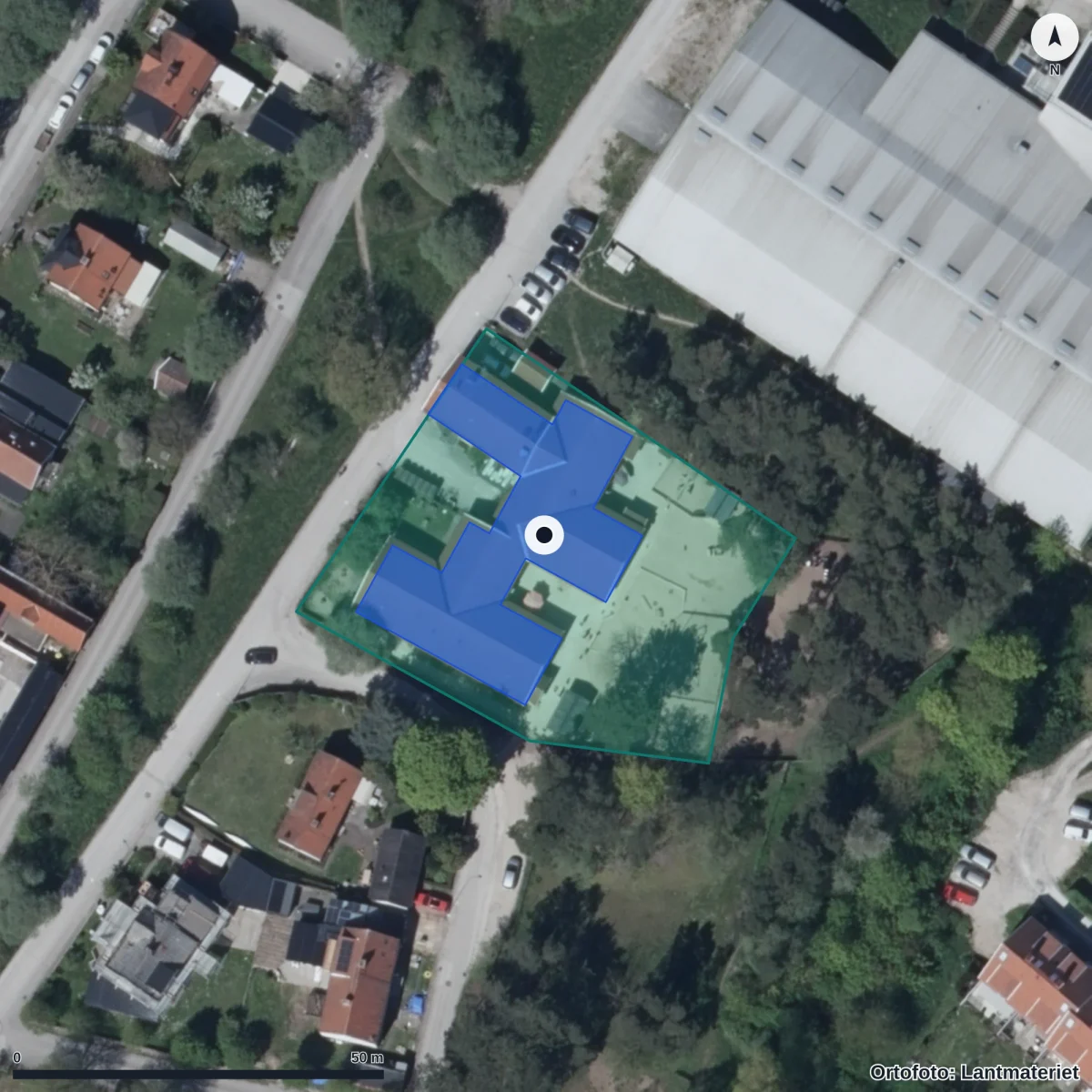
The school's property boundary and buildings from the Swedish Land Survey's property register. Updated 2026. Source: Lantmäteriet · CC BY 4.0
Entrances:1 Gotland, Bergsgatan 10, Visby
Municipality: 49.7% · Sweden: 44.3%
We have no inspection documents for this school. Our inspection data is incomplete: it mainly covers regular and targeted inspections, and most quality reviews are still missing.
Source: Schools Inspectorate + Skolverket · Last updated: 5 Oct 2026
109 other schools in the municipality.
REGION GOTLAND is the operator. The municipality has 109 other schools.
Source: Skolverket · Last updated: 6 Oct 2026
Use Gotland school portal for information about preschool application.
forsk-833973Source: Skolverket School Unit Register · Pipeline-fetched on 2026-10-06.
Everyday travelAreas that reach the school within 15 minutes.
School-form averages across the municipality, with links to deep-dive sub-pages.
Source: Skolverket (aggregated school statistics).
Get email when new statistics are published, merit value changes significantly or the School Inspectorate makes a new decision.
The Data view shows complete history, sources, methodology and CSV export.
Source: Kolada (municipality-aggregated certified teacher trend).
Key figures for FORELLEN FÖRSKOLA. Compared to municipal and national averages.
Skolverket's mutually exclusive categories for staff in the preschool unit. The figures come from Skolverket's annual survey; staff hired after the survey appear first in the next survey.
| Category | This preschool | Municipality | National |
|---|---|---|---|
| Pedagogical higher educationpreschool teachers and others with a Swedish higher-education degree | 63% | 49.7% | 44.3% |
| Upper-secondary qualification for work with childrenchildcare assistant training or equivalent | 19% | 15.9% | 15.4% |
| Some pedagogical trainingfor example parts of a pedagogical education | 12% | – | – |
| Other educationother education, including foreign qualifications not validated in Sweden | 6% | – | – |
| Other educational background (combined)comparison row for the two categories that municipal and national statistics publish together | 18% | 34.4% | 40.2% |
Of which preschool-teacher degree: 56%
Preschool-teacher licence (share of full-time posts): 63% · Municipality 50.7% · National 44.7%
A preschool-teacher licence is Skolverket's proof that someone is a qualified preschool teacher; as a rule, only licensed preschool teachers may be responsible for teaching. Pedagogical higher education means a university degree with a teaching focus, with or without a licence. The measures are counted separately, so the share with a licence can be higher than the share with pedagogical higher education.
| Share | This preschool | National |
|---|---|---|
| Share of girls | 57% (exact value 57.0%) | 48.6% |
| Children with a foreign background (born abroad, or both parents born abroad) Including children who were not in the population register on 30 September of that year. | Not reported (Skolverket)Skolverket does not publish this value, and Skolkoll does not estimate it.Not reported (Skolverket) — Skolverket does not publish this value, and Skolkoll does not estimate it. | 24.2% |
| Children with at least one parent with post-secondary education | 81% (exact value 81.0%) | 68.1% |
The figures describe which children are enrolled, not the preschool's quality, and affect no rankings on Skolkoll. The shares vary a lot between municipalities and neighbourhoods; the national figure is a reference, not a norm. At a small preschool a single child can move a share by several percentage points. Skolverket does not publish a value that rests on few children, so small preschools often lack it.
National averages for group sizes and children per FTE are calculated from all 290 municipalities; the other national figures cover the whole country. Municipal data is aggregated and applies to all preschools in Gotland. Source: Skolverket preschool statistics. Updated annually.
More context about Forellen Förskola, its municipality, operator and similar schools.
Data coverage
Open school data is not complete. Use this as a checklist for what to verify with the school, provider or municipality.
See Data view for full sources and fetch dates per source.
